
LED High Bay vs Low Bay Lights: KML, a Trusted LED Lighting Manufacturer, Explains Which One Fits Your Space
Choosing between high bay and low bay lighting can make a big difference to brightness, energy use, and safety in a commercial or industrial building. Both types are designed for large indoor spaces, but they differ in mounting height, light output, beam pattern, and typical uses. Picking the wrong one can leave a space too dark or full of glare, and it can waste energy. This article explains how the two compare, so facility managers, contractors, and business owners can choose the right lighting for their building with confidence.
LED High Bay Light vs Low Bay Light: What’s the Difference?
The main difference between high bay and low bay lighting comes down to ceiling height. High bay fixtures are built for tall spaces and send strong, focused light down from a great height. Low bay fixtures suit lower ceilings and spread light more widely over a shorter distance. Working with an experienced led lighting manufacturer like KML helps buyers match the fixture type to the building, since the right choice depends on mounting height, room layout, and the work being done below. Getting this decision right is the foundation of an efficient lighting system.
What an LED High Bay Light Is Designed For
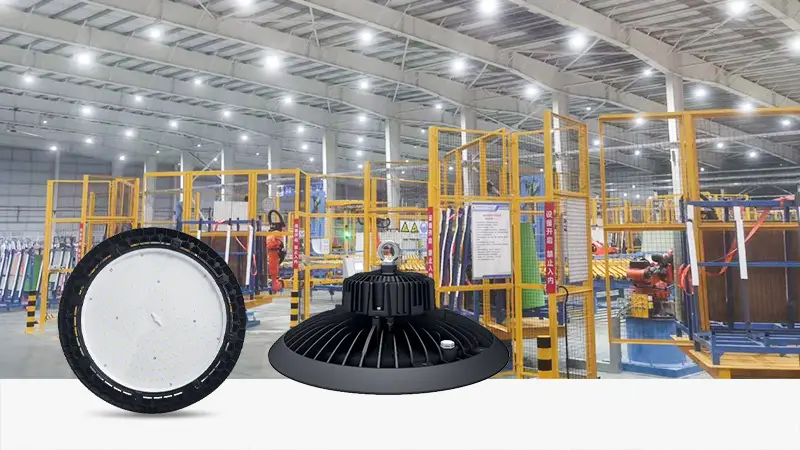
High bay lights are made for spaces with ceilings of roughly 20 feet or more. Typical examples include warehouses, manufacturing plants, distribution centers, gymnasiums, and large workshops. Because they are mounted so high, they use narrower or medium beam angles to direct light downward, ensuring enough brightness reaches the floor and work surfaces. Without this focused design, much of the light would be lost before reaching the people working below. High bay fixtures are therefore essential for maintaining safety and productivity in tall industrial buildings.
Lumen Output and Design Types of High Bay Fixtures
High bay lights produce far more light than low bay fixtures, often from about 15,000 lumens to well over 50,000 lumens, depending on the model. This high output keeps brightness consistent over long distances. They come in several designs. Round UFO-style fixtures are compact and popular in warehouses and factories, while linear high bays suit aisles and long production lines. KML’s high bay range includes UFO models such as the UFOH and UFOHA, industrial models like the HB30, HB40, and GKH, and linear high bays such as the DGN2202 and LHK.
What a Low Bay Light Is Designed For
Low bay lights are designed for ceilings between about 12 and 20 feet. They are common in retail stores, workshops, garages, small warehouses, and some commercial facilities. Since they are mounted closer to the floor, they do not need the same high output as high bay fixtures. Using a high bay light in a low-ceiling space would create glare and harsh hot spots, while wasting energy. Low bay fixtures provide comfortable, balanced lighting in these spaces, which is especially important where staff or customers spend long periods close to the lights.
Beam Angle and Light Distribution
Beam angle is one of the clearest differences between the two types. High bay fixtures usually have narrower beams that push light down from tall ceilings. Low bay fixtures use wider beams to spread light evenly across a room from a lower height. This wider spread prevents bright spots directly beneath each fixture and dark areas between them. The goal in both cases is uniform, comfortable illumination. Choosing the right beam angle for the ceiling height is just as important as choosing the right wattage when planning a lighting layout.
Energy Use and Efficiency
Low bay fixtures generally use lower wattages than high bay lights because they cover shorter distances. However, efficiency depends on correct application rather than fixture type alone. A properly specified high bay system in a tall warehouse can be extremely efficient, while a poorly chosen low bay system can waste energy. Key factors include wattage matched to mounting height, beam angles designed for even coverage, and the use of dimming or smart controls. When these are planned carefully, both types deliver strong energy savings compared with older lighting technologies.
Installation and Maintenance Differences
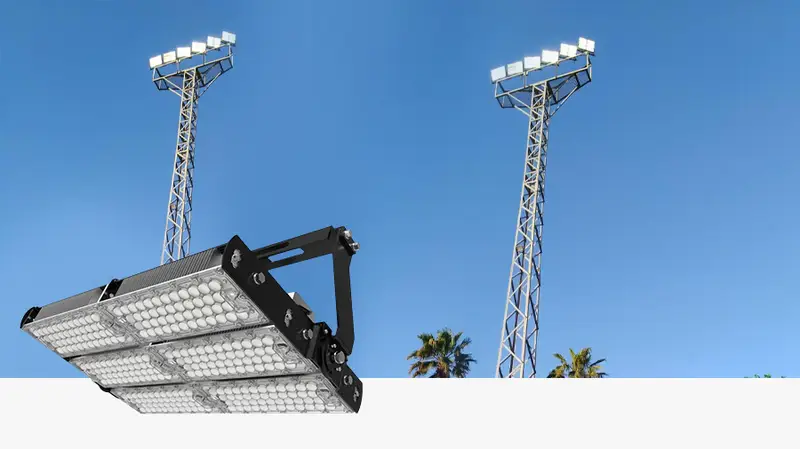
Because they are mounted so high, high bay fixtures usually need hooks, chains, pendant mounts, or special brackets. Servicing them often requires lifts or scaffolding, so durability and long lifespan are especially valuable. Low bay fixtures are easier to install and maintain since they sit lower and can often be reached with ladders. In both cases, quality construction reduces the need for maintenance. KML’s quality control includes inspection at several production stages and burn-in testing of finished products, helping fixtures perform reliably wherever they are installed.
Choosing Based on Ceiling Height and Activities
The first and most important step is to measure the ceiling height accurately. For ceilings above about 20 feet, high bay lighting is usually the right choice. For lower ceilings, low bay fixtures generally provide enough light without glare. The activities in the space also matter. Precision manufacturing or detailed assembly work may need brighter, more focused light, while retail spaces need even lighting that makes products look appealing. Matching fixture type to both the building and its use ensures safety, comfort, and productivity.
Planning for Future Flexibility
Buildings change over time. Warehouses add racking, factories reorganize production lines, and stores update their layouts. Choosing lighting that can adapt to these changes saves money later. Modular high bay systems and adjustable low bay fixtures make it easier to reconfigure lighting as needs evolve. It also helps to choose fixtures that work with motion sensors and daylight controls, and that are easy to service or upgrade. KML offers free initial design consultation and lighting simulations to help buyers plan systems that work well today and in the future.
 Romaian
 English
 Arabic
 French
 Spanish
 Portuguese
 Deutsch
 Turkish
 Dutch
 Italiano
 Russian
 Portuguese (Brazil)
 Greek