


Restoring a Dissolved Company: A Complete Guide for UK Business Owners
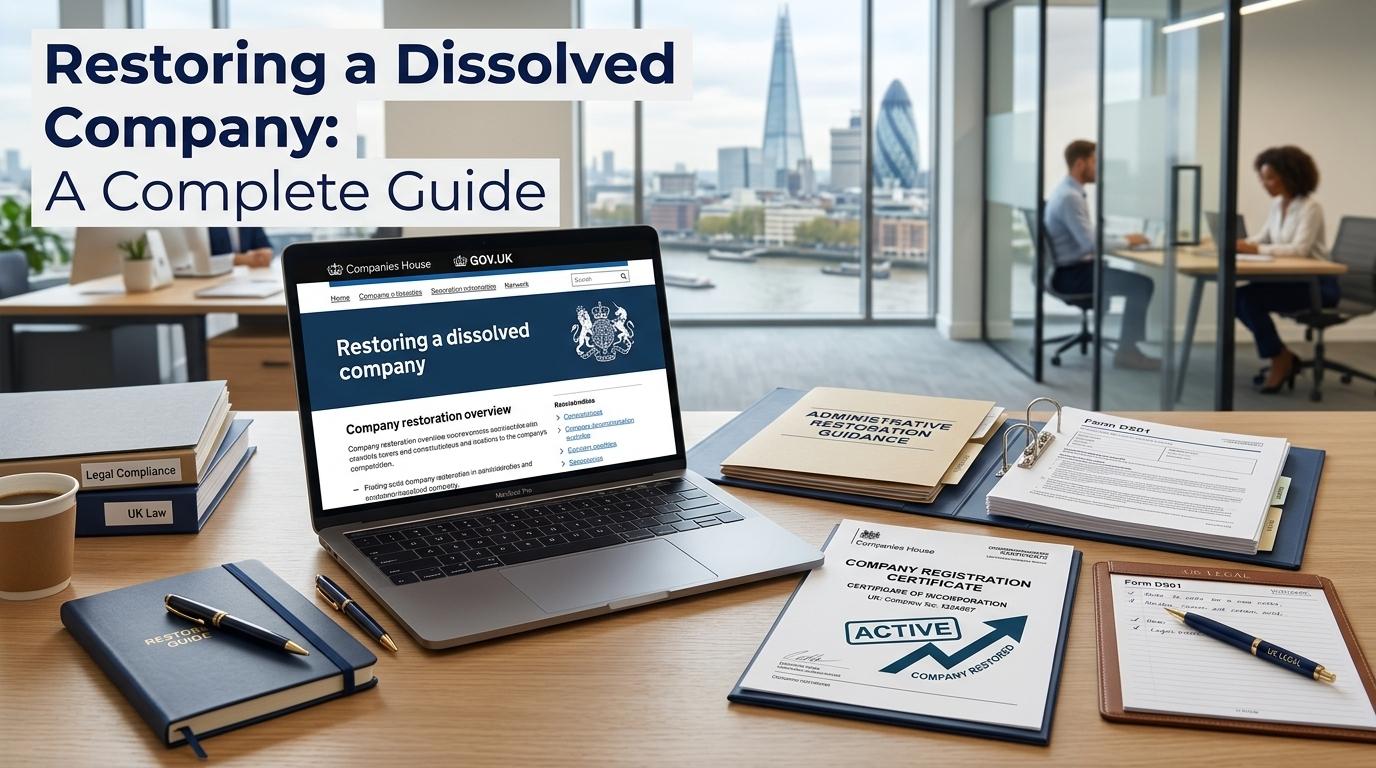
A company may be dissolved for several reasons, including missed filing deadlines, administrative issues, or a decision to close the business. However, circumstances can change, and former directors or shareholders may discover that they need the company again to recover assets, resolve legal matters, or continue business activities. In these situations, understanding the process of restoring a dissolved company is essential.
In the UK, company restoration allows an eligible business to return to the Companies House register. The correct procedure depends on how the company was dissolved and why restoration is required. This guide explains the restoration process, the purpose of Form DS01, and the key considerations for business owners.
What Does Restoring a Dissolved Company Mean?
Restoring a dissolved company means returning it to the official Companies House register through the appropriate legal procedure. Once a company has been dissolved, it generally ceases to exist as a legal entity, which can create difficulties when dealing with outstanding claims, contracts, or company assets.
The process of restoring a dissolved company can help eligible applicants address these issues and reinstate the company's legal status.
There are two main restoration routes in the UK: administrative restoration and restoration by court order.
Administrative restoration may be available to former directors or shareholders when Companies House has struck off the company and the relevant statutory conditions are satisfied. Court restoration may be necessary when the company was voluntarily dissolved or when administrative restoration is unavailable.
Understanding the reason for dissolution is the first step towards choosing the correct procedure.
Why Might a Company Need Restoration?
There are several reasons why a former company may need to be restored.
Recovering company assets: When a company is dissolved, certain assets may pass to the Crown under bona vacantia rules. Restoration may provide a route to addressing ownership and recovering eligible assets.
Resolving legal disputes: Former directors, shareholders, or creditors may need the company restored to pursue or resolve a legal claim.
Continuing business operations: Some business owners may wish to resume trading through the original company rather than establish a new legal entity.
Addressing outstanding obligations: Restoration may help resolve unresolved financial, contractual, or administrative matters connected with the dissolved business.
Before proceeding, consider whether restoration is necessary and whether the potential benefits justify the associated costs.
What Is Form DS01?
Form DS01 is the official form used to apply for voluntary strike-off of a UK limited company. It is generally relevant when a company is no longer needed and its directors wish to close it, provided the business meets the legal eligibility requirements.
It is important to understand that Form DS01 is used to begin the dissolution process, not to restore a dissolved company.
Businesses considering voluntary closure should review the Form DS01 and company strike-off services to understand the process and the support available.
Before submitting a strike-off application, directors must ensure that the company meets the relevant conditions, notify the required parties, and deal appropriately with its affairs. Voluntary strike-off must not be used as a substitute for formal insolvency proceedings when a company is unable to pay its debts.
Can Form DS01 Be Used to Restore a Company?
No. Form DS01 and company restoration serve opposite purposes.
Form DS01 is used to request voluntary removal of a company from the Companies House register. If the company has already been dissolved following a voluntary strike-off application, restoration generally requires a court order.
By contrast, administrative restoration may be available when Companies House struck off the company for reasons such as failure to meet filing obligations, provided the applicant and company satisfy the relevant conditions.
Choosing the wrong procedure can waste time and money. Always check the company's filing history before deciding which application to make.
How to Restore a Dissolved Company in the UK
The restoration process generally involves the following steps.
1. Check the Company's Status
Search for the company on the Companies House website using its name or registration number. Review its status and filing history to establish when and why it was dissolved.
2. Choose the Correct Restoration Route
Determine whether administrative restoration or a court application is appropriate. Administrative restoration generally requires the company to have been struck off by the registrar and the applicant to meet the eligibility requirements.
3. Prepare the Required Documents
Administrative restoration normally requires Form RT01, relevant supporting documents, outstanding statutory filings, and applicable fees or penalties. A bona vacantia waiver letter may also be required in certain circumstances.
Court restoration follows a separate legal procedure and may require additional documentation.
4. Submit the Application
Follow the current Companies House or court instructions for the relevant restoration route. Check the applicable fees and ensure all supporting documents are complete before submission.
Administrative restoration generally must be requested within six years of dissolution, although eligibility requirements and exceptions should be checked against current official guidance.
How Much Does Company Restoration Cost?
The overall cost depends on the restoration route and the company's outstanding obligations. Expenses may include application fees, overdue filing penalties, court fees, legal advice, and costs associated with company assets.
Administrative restoration has a published application fee, but applicants should confirm the current amount before applying. Court restoration can be more expensive because it involves formal legal proceedings.
Reviewing the company's records and seeking professional advice can help you understand the likely costs before starting the process.
Conclusion
Restoring a dissolved company can be an important step when former directors, shareholders, or creditors need to recover assets, address legal claims, or resolve outstanding business matters. The correct procedure depends on the circumstances of dissolution and the applicant's eligibility.
Form DS01 is intended for voluntary company strike-off and cannot be used to restore an existing dissolved company. Understanding this distinction helps business owners avoid unnecessary delays and choose the appropriate route.
Before taking action, review the company's Companies House record, identify any outstanding obligations, and consult the official guidance. For complex cases involving company assets, debts, or legal disputes, consider seeking advice from a qualified professional.

 Arabic
 French
 Spanish
 Portuguese
 Deutsch
 Turkish
 Dutch
 Italiano
 Russian
 Romaian
 Portuguese (Brazil)
 Greek